Author

amw

Browsing

While our kids are out of school and staying home during this unprecedented time, there are many online educational resources for kids to continue learning as much as possible. Here are 125+ free and useful educational websites for kids to keep them learning and entertained.

125+ Free and Useful Educational Websites for Kids

Math

  1. Math practice from counting to algebra and geometry at MathScore.
  2. Interactive elementary – grade 6 math
  3. Math Games, Logic Puzzles and Brain Builders at MathBuilders.
  4. Motivate 1st to 8th-grade students to learn and practice math at Prodigy.
  5. Math and language games at Arcademics.
  6. Free printable K-8 Reading and Math printable worksheets.
  7. Math and logic problems grade 1 – 12.
  8. Great Minds Math on the go.
  9. Fun math and reading games at Abcya.com. 
  10. Almost 10,000 printable math worksheets on Dad’s Worksheets.

Literacy

  1. Scholastic Learn at Home.
  2. Fave kids books read by famous people – Story Online
  3. Reading passages for grades 3-12, with reading comprehension and discussion questions. Common Lit.
  4. Grammar practice for middle grades – Classroom Cereal
  5. Engaging reading game for grades 2-8 – SquigglePark.com
  6. Brainbox Games is your hub for educational technology.
  7. An online curriculum that builds better writers.
  8. Teaches students how to write a paragraph through an interactive online tutorial. 
  9. Into the Book for reading comprehension.
  10. News and more for kids at Youngzine.
  11. Work on the 8 parts of speech at Grammaropolis.
  12. ReadWorks is an online resource of reading passages and lesson plans for students of all levels K-12.
  13. Phonics worksheets for kids at Fun Fonix.
  14. Free stories online ages 3-12.
  15. Randomly generates 356,300,262,144 story starters.
  16. National Geographic Young Explorers is a magazine designed specifically for kindergarten and first-grade students. Read along!

Arts

  1. National Gallery of Art offers computer-based activities in art and art history.
  2. Crafts and educational activities at Education.com.
  3. Crafts, activities, printables at AllKidsNetwork.
  4. Fun games, recipes, crafts, activities at HighlightsKids.
  5. Art games, investigations and printables at Artsology.
  6. Courses and games for ear training and music theory.
  7. Movement and mindfulness videos created by child development experts.
  8. Play instruments online including virtual guitar, piano, pan flute, drums, and bongos.
  9. Chrome Music Lab is a website that makes learning music more accessible through fun, hands-on experiments.
  10. Introductory and intermediate music theory lessons, exercises, ear trainers, and calculators.
  11. Kids Think Design explores careers in fashion design, graphic design, interior design, book design, product design, film and theatre, architecture, animation, and environmental design.

Science

  1. Space science for kids at NASA.
  2. Activities, animations, projects, simulations, videos at American Association of Chemistry Teachers.
  3. Science simulations, scientist profiles, and other digital resources for middle school science and high school biology.
  4. Collisions helps high school students visualize and interact with chemistry concepts through fun and challenging games.
  5. Empowering students to be authentic science problem solvers at Tyto Online.
  6. 3D printing projects and Coding projects, involving math and other K-12 subjects at Instructables. 
  7. Coding for ages 4-10.
  8. Science Journal for Kids and Teens.
  9. Homeschool science resources and printables.
  10. This NASA initiative covers a wide range of topics including weather, climate, atmosphere, water, energy, plants, and animals.
  11. K-5th Science lessons.
  12. K-12 STEM at Concord.  
  13. Innerbody teaches the internal mechanics of the amazing human body.
  14. Learn computer science and coding K-12.
  15. Science and math labs, simulations and videos.
  16. 80+ do at-home science activities at Elemental Science.
  17. Learn physics online at Positive Physics.
  18. Learn physics online at Physics Classroom.
  19. Science experiments that you can do at home.
  20. STEM Activities for Kids at Science Buddies.
  21. Everything needed to learn computer programming the fun way! Ages 5+
  22. Learn all about the periodic table. 

Geography/Travel

  1. Test kids’ geography skills. Using images from Google’s Street View, it puts players in the middle of the street and asks them to figure out where they are. GeoGuessr.com
  2. 35,000 pages of online content on the cultures and countries of the world at Country Reports.
  3. Tour the Louvre virtually.
  4. Tour the Smithsonian’s zoos or museums virtually.
  5. Take an inside tour of the MET museum.
  6. Take a virtual tour of the Great Wall of China.
  7. This educational website hosted by the Smithsonian Museum takes a deep dive into ocean life.
  8. Tour the British Museum.
  9. Tour Yellowstone National Park.
  10. Explore the surface of Mars on the Curiosity Rover.
  11. Learn all about earthquakes. 
  12. Farmer’s Almanac for kids! Learn about weather, moon phases and more.
  13. Interactive video earth science-based curriculum supplement.


Animals

  1. Tour Canadian farms virtually.
  2. Play games and learn all about animals at SwitchZoo.
  3. Explore space, science and learn all about animals at National Geographic Kids.
  4. Smithsonian’s National Zoo and Conservation Biology Institute.
  5. Watch live Alaskan Wildlife cams.
  6. San Diego Zoo Kids.
  7. All about Birds.

History

  1. Games, quizzes and fact sheets take kids on a journey through time at BBC Kids.
  2. Kids encyclopedia. 
  3. Canada’s History.
  4. Online history classes for all ages preteen through adults.
  5. Allows students to type in any city, state, or country to view an archive of historical photographs and other documents at What Was There.
  6. Learn about the U.S. government at Ben’s Guide.
  7. An interactive way to learn American history. 

Languages

  1. Learn French at DinoLingo.
  2. Resources for Spanish practice.
  3. Chinese learning activities.
  4. Music Based Spanish Learning
  5. Vocabulary, grammar, listening activities and games in Spanish, French, Italian, German, Portuguese, Korean, and Latin at Conjuguemos. 


Young kids

  1. Day-by-day projects to keep kids reading, thinking, and growing at Scholastic.
  2. Phonics skills at Starfall.com.
  3. Play with fave show characters and learn too at PBS kids.
  4. Read, play games, and hang out with Dr. Seuss.
  5. Free Printables for PreK-Grade 2.
  6. A large selection of fun songs to help teach preschool and kindergarten students.
  7. Online digital colouring pages.
  8. Free printables library with activities for children 0-6 at Little Spark Company.
  9. Phonics and learning to read at Reading Eggs. 
  10. PreK-5 games for all subjects at Turtle Diary.
  11. Quick and easy at-home projects curated for kids 2 and up.
  12. Resources, tools, ideas, and activities geared toward the healthy development of kids OT Toolbox.
  13. Education for kids all topics at Ducksters.com.
  14. Education for kids 3-11 at


Full learning websites K-12

  1. PreK-12 digital media service with more than 30,000 learning materials at PBS Learning.
  2. Quizlet is a student and teacher online community for every subject.
  3. Science, Math and Social Studies. 
  4. 2,500+ online courses from top institutions.
  5. Free and fun digital education for children.
  6. Printable worksheets and activities for kids.
  7. Online education program for kids through high school at Khan Academy.
  8. 7,000 free videos in 13 subject areas at HippoCampus.
  9. Educational digital games K-12.
  10. Daily lessons and educational activities that kids can do on their own.
  11. Digital learning content for preschool through high school.
  12. Test Prep for SAT, ACT, etc.
  13. Free homeschool materials covering phonics, reading, writing, spelling, literature, grammar, punctuation, art, and geography.
  14. BrainPOP is offering free access during school closures.
  15. Free worksheets for teachers, homeschoolers, and tutors.

Fun games & activities for kids

  1. Wonderopolis is a place where natural curiosity and imagination lead to exploration and discovery in learners of all ages.
  2. Tons and tons and tons of games some learning some just fun at Crazy Games.
  3. Learn how to type!
  4. Funbrain offers hundreds of games, books, comics, and videos that develop skills in math, reading, problem-solving and literacy.
  5. Life skills curriculum for students in grades K-12. Their resources include strategies for teaching social and emotional skills.
  6. Online  jigsaw puzzles where you can set the pieces from 6-1000+
  7. Knowledge Kids games.

Happy learning!

125+ Free and Useful Educational Websites for All Kids | amotherworld

Many people who’ve been used to working in an office environment are now suddenly finding themselves working remotely. How to work from home effectively?

How can you make the transition smoothly? What are some tips to work from home efficiently and productively? I’ve been working from home for the past 15 years so I’m offering my tips on working from home.

How to Work From Home Effectively

Create a dedicated working space.

While it may be tempting to work from the comforts of your bed, it would help productivity to have a dedicated working space. A home office is ideal, or even an area set up in a part of a room, for example, a desk by your living room window will suffice. If you don’t have a home office, create a space at your kitchen or dining table that you can leave undisturbed when you’re not working.

Get up and stretch.

Because of my back issues, I must get up and stretch often, about every hour or so regardless of what I’m doing. When I’m working, I tend to switch work positions – I go from sitting at my desk to working from my standing desk, to working on my couch. During that stretch time, I’m always sure to grab another cup of coffee too!

Get dressed.

While it may be tempting to stay in your pyjamas all day, you will feel better by sticking to your usual morning routine of getting washed up and dressed in the morning. Obviously there’s no need to dress in business attire! But getting out of your PJs and slipping into clothes will help you feel more refreshed and ready to start your day.

Stick to your regular working hours.

Avoid burnout by sticking to a regular work schedule. While it may be tempting to check your emails after hours or early in the day, work will inevitably take over. Start at a proper workday time, and finish off at a reasonable hour. Don’t forget to take your lunch break as you would in the office. I like to use my lunch break to exercise. Working with a structured schedule will keep you motivated and productive. But…

Don’t worry if you don’t stick to a strict schedule all the time.

One of the benefits of working from home is flexibility, and there will be days when you sometimes you need to work later or in the evening or start early to accommodate a colleague’s time zone, personal appointments or your children’s schedule. Be gentle with yourself knowing that some days will require more work than others but that the number of hours of work will even out over the course of the week.

Keep the TV off.

You may be able to multi-task but don’t think that means you can put the television or Netflix on! You will likely end up being distracted thus leading to less productivity. Stick to your usual radio station or playlist as background music.

Stay in touch by phone or video call.

Working from home can be incredibly isolating! You’ll miss collaborating with a team, chatting with co-workers and simply being around other people. It’s important to stay in touch with your colleagues by phone or better yet, video conferencing.

Take a mental health break.

Working from home means that there is no separation of work space and home space. You’ll need a change of scenery and some fresh air often! Read through this article to help keep your mental health in check.

How to Keep Your Mental Health in Awesome Check

If you’re working from home with kids? Here are some additional tips to keep them busy while you work.

Here are 50 Fun Activities to do with Kids at Home.

I hope these tips on how to work from home effectively will benefit you!

How to Work From Home Effectively | amotherworld.com

Kids are home for an extended March Break. Parents are wondering how to keep their children busy and entertained, without screens the entire time? Here are 50 fun activities to do with kids at home to keep them from whining, “I’m bored!” These activity ideas will help families make the most of their time together.

50 Fun Activities to do with Kids at Home

  1. Make slime, oobleck, or play dough.
  2. Let the kids paint a picture on a poster board or canvas.
  3. Paint a large picture together on the floor. If you don’t have roll paper, tape construction paper together to make a landscape painting.
  4. Do a large 1,000 piece puzzle.
  5. Do crossword, Sudoku and word search puzzles.
  6. Find some notebooks and have the kids start a journal.
  7. Create a scrapbook for each child; have them decorate the cover and add the content.
  8. Create a photo book online together, choosing the best family photos.
  9. Go through old magazines, cut and paste pictures to create a collage of your favourite things or a vision board.
  10. Look through old photo albums, baby photos and watch old baby videos.
  11. Do a craft together; have a bin full of craft items handy for times like these.
  12. Have the kids go through their toys and find items to donate and sell.
  13. Clean out your closets and put items to donate and sell aside in separate boxes.
  14. Post your items to be sold online on Kijiji or Marketplace, have the kids take photos of the items.
  15. Play board games, charades, hide and seek, I-Spy.
  16. Learn new card games.
  17. Build something out of Lego.
  18. Create an obstacle course outside, or races in the backyard like hopping on one foot, crabwalk, potato sack races, tug of war, etc.
  19. Create a stop motion animation video using clay or playdough.
  20. Build a fort or tent out of blankets. Turn off all the lights and tell scary stories.
  21. Snuggle up and read books together.
  22. Bake a batch of chocolate chip cookies or Rice Krispies bars
  23. Put on a yoga YouTube video and do yoga together.
  24. Guide your kids through a meditation.
  25. Play video games together.
  26. Let your kids paint your nails, do your makeup and hair; take turns.
  27. Dress up in your best or silliest outfits and take pictures.
  28. Dim the lights and put on some fun music and have a dance party.
  29. Have the kids put on a talent show; they can sing, dance or perform a skit.
  30. Film some silly Tik Tok videos and have fun with Snapchat filters.
  31. Have a Karaoke party
  32. Create a movie script with the kids and film it, then edit.
  33. Have the kids draw pictures or write letters to a family member or friend and mail them out.
  34. Draw portraits of each other.
  35. Create email addresses for your kids and send them an email; let them read their first email from you.
  36. Set up an indoor scavenger hunt.
  37. Put on your pyjamas, make popcorn and watch a movie.
  38. Re-organize or re-decorate your kids’ bedroom
  39. Choose a topic kids are interested in and research it together.
  40. Get outdoors for some yard work.
  41. Get some old socks and have the kids create sock puppets.
  42. Find a large cardboard box and create a puppet theatre. Let the kids put on a puppet show using stuffed animals; make sure to record it.
  43. Go for a hike, collect rocks and then let the kids paint them.
  44. Play road hockey, basketball or baseball outside.
  45. Have a mini-stick hockey tournament.
  46. Play hopscotch indoors by using masking tape on the floor.
  47. Use food colouring or food scraps to dye eggs, then decorate them.
  48. Have the kids learn magic tricks through YouTube videos.
  49. Take a nap.
  50. Go outdoors for a walk.


50 Fun Activities to do with Kids at Home | amotherworld

50 Fun Activities to do with Kids at Home - amotherworld.com


Kids are probably hearing things about the Coronavirus at school, and parents are wondering how to talk to them to ease their fears. How to talk to your kids about the Coronavirus? How much information should you be sharing to your kids about Covid-19?

I asked Sara Dimerman who is a psychologist, author and parenting expert, some questions about how to talk to your kids about the Coronavirus and ease their anxiety and fears.

How to Talk to Your Kids About the Coronavirus

Q. How should parents talk to their kids to help ease any anxiety? Should they have a family meeting, individual conversations, talk to the school?

A.  I had a young boy in my office today who is generally anxious. But today he was especially so because although it appears that the teachers did a good job of reminding students of the importance of hand hygiene, he overheard a conversation between his teacher and another adult when they may have thought the students were otherwise engaged. He heard something about a frenzy at Costco and how nervous everyone is and buying all the paper products off the shelf. Although he couldn’t quite make sense of why paper products? Why Costco? He did know that they were talking about the Coronavirus and he could sense the panic in their voices and so this escalated his anxiety

So my advice to all adults – parents and teachers alike – be careful not only about how you are directly presenting information about this to children but be mindful about what you are sharing with one another in the presence of children. Whether you think so or not, they ARE listening!

There’s so much being spoken about on the news, through social media, on the streets, that it’s impossible to shield your children from what is going on around them. Instead, use what you see and hear together as opportunities to talk more. Let them know, if they hear or see talk about it, that there are lots of very intelligent and caring adults who are working hard at making sure that people are safe. Are working at figuring out how to keep everyone well. Help them to feel that they are being taken care of, in other words.

I don’t recommend a family meeting because this can set an ominous tone, but instead, find appropriate times to remind them about the importance of washing hands regularly (show them how you wash yours) and why it’s never a good idea to put fingers in one’s mouth or up one’s nose, even at the best of times.

Wash Your Hands Properly Steps | amotherworld.com

Q. What are some age-appropriate strategies and tips we should provide our kids (from elementary through to high school)?

A.
For Younger Kids:

  • Remind them about good hand washing strategies
  • remind them that it’s important to wash hands before eating
  • Remind them about coughing or sneezing into one’s sleeves rather than into their hands
  • remind them about not sharing food or drink with others

For Older Kids:

  • Remind them about how germs can be spread through kissing and hand-holding. They don’t have to stop holding hands with people, but to be mindful about washing those hands before putting them near their mouth, nose or eyes. And not to take chances of getting sick by kissing someone who is.
  • Comfort kids of all ages with the knowledge that most people get well after they have the Coronavirus unless they are particularly vulnerable
Q. What are the most important things should we share with kids about coronavirus?
  • There are a lot of viruses but this is a new one, so people are still figuring out the best way to treat people who have it, and that’s why people are more concerned about this one
  • There are a lot of intelligent, helpful and knowledgeable adults who are working together to stop the spread of the virus and to help people who are sick with it
  • They have the power to stay well and keep germs away by doing things such as washing hands and not putting their fingers near their mouth, eyes or nose before washing their hands.

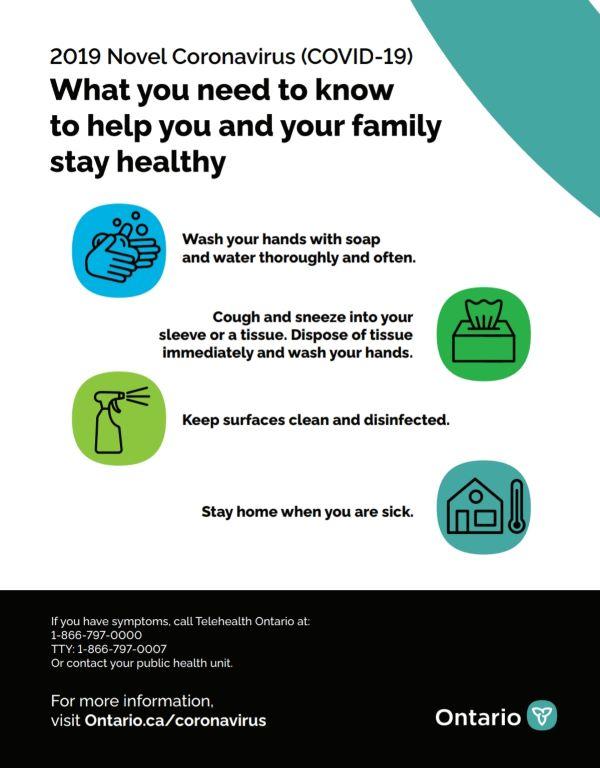
Coronavirus prevention Ontario government

For more information about Coronavirus disease (COVID-19), please click here.

How to Talk to Your Kids About the Coronavirus | amotherworld.com

As young as I can remember, I wanted to be an actress or a writer.  I documented my dream job in my “All About Me” project in elementary school, listing the reasons why along with sketches of books I’d write, like a Sweet Valley High series.  I had always loved watching television and movies and knew I was going to either write or get into acting. In Grade 7, I wrote a script for our Junior High School play based on a Three’s Company episode, performing the comedy during a school assembly. At the age of 11, I was writing my first romance novel. By the time I was a teenager, I went down a deep hole of writing dark poetry on existentialism and analyzing my own mortality. I took drama from middle school throughout high school, with the hopes of getting into a University theatre program at Ryerson.

At that time, modelling agencies would often have casting calls in shopping malls. Approached by one around the age of 16, I was flattered but knew that at 5’7”, I was on the shorter side for modelling. But by joining a modelling agency, I could audition for commercials which could help me break into acting. Oh, the excitement and anxiety I felt leading up to that appointment. I prepared myself for the fact that my height was likely not going to qualify me to model. But never did I imagine that my size 6 frame was considered too thick. “You’ll need to lose weight”, the agent said. From where? I was already small enough, so I thought. In order to be representing by the agency, I would have to drop at least 10-15 pounds. I was already 125 pounds – a healthy weight for my height – there was no way I could drop down to 110.

Luckily I was confident enough in myself to reply that I wasn’t going to starve myself. A young impressionable girl with big dreams could easily be swayed to begin a low-calorie diet, become obsessed with exercising to drop the weight – leading to a possible unhealthy lifestyle and a potential eating disorder. I knew better and declined the offer.

Instead, I pursued acting through a talent agent and began going on auditions while taking acting lessons. Once I began auditioning, it became glaringly obvious – I always was the bigger one among the young women there. When I looked in the mirror and saw my size 6-8 frame, I felt as though I was slim enough. But when I compared myself to the others, the size difference was obvious. I mean, my ribs and wrist bones were larger than other girls, there was no way I could ever have a smaller waist, it was physically impossible unless I had a rib removed! There was no way I could compete with a size 0 girl.

I Was Told I Needed to Lose Weight to Model | amotherworld

I recall looking around, sizing up my competition and always feeling like I couldn’t measure up to what the casting people were looking for. Couldn’t they see that I was a healthy weight? Why did that even matter? Wasn’t my audition enough to sell my acting ability?  But the camera puts on 10 pounds so I’d never stand a chance. It seemed the casting directors or producers were always going to hire the slimmer one.

Disillusioned by the industry, I knew I was done. I didn’t want to put myself in constant situations where I’d feel less than enough. It wasn’t good for my mental health and I wasn’t going to suffer physically in order to be relevant. The TV/film industry is full of competition and rejection, causing anxiety and self-esteem issues for many. What we see displayed in various forms of media can have a negative psychological effect whether consciously or subconsciously.

We’ve seen some great strides in body-positive on social media; some innovation campaigns with inclusivity in fashion, with models like Ashley Graham leading a body positivity revolution. We’ve also seen some gorgeous “plus-size” models – and I use quotes as these women are considered plus-size in the fashion industry but are average in real life – like Crystal Renn and most recently, Jill Kortleve for Chanel strut the runways.

But in Hollywood? Not even close.

Search up “more body inclusivity in movies” and you’ll read headlines like “In a Body-Positive Moment, Why Does Hollywood Remain Out of Step” and Hollywood’s enduring size inclusivity problem and 20 Celebrities Criticized for their Curves and 9 Hollywood Actresses Who Were Told They Weren’t ‘Pretty Enough’ To Make It In Hollywood.

How has being in this toxic industry affected my own self-esteem and body image? Stay tuned for my next post where I share how that experience influenced me much deeper than I ever cared to admit to myself.


It’s National Chili Day! Happy Chili Day!

To celebrate this momentous occasion, I’m sharing the best Chili recipe people ask me to make for them throughout the winter months. It’s sure to fill your belly with its hearty, lightly spicy warmth.

The Best Chili Recipe People Ask Me to Make

Ingredients:

  • 1 1/2 lbs lean ground beef
  • 2 medium onions, chopped
  • 3 cloves garlic, chopped
  • 4 stalks celery, chopped
  • 4 carrots, chopped
  • 1 large sweet green pepper, chopped (optional)
  • 3 tbsp. chili powder
  • 1 tbsp oregano
  • 1 tbsp onion and garlic powder
  • 1 tsp salt and pepper, each
  • 2 cups tomato puree/ strained crushed tomatoes
  • 1 -2 cans of pinto and/or red kidney beans, depending on how hearty you want your soup
  • 1 cup water
  • 1 cup beef stock
  • pinch of red pepper flakes
  • coriander leaves for topping


Method:

  1. In a large pot, brown beef over medium heat, breaking up with the back of a spoon until no longer pink.
  2. Reduce heat to a minimum. Add chopped onions, garlic, pepper, carrots, celery, and spices. Stir and cook until vegetables are softened, about 5 minutes.
  3. Stir in the tomatoes, beef stock and water. Bring to a boil and then reduce heat. Cover and simmer for at least a half-hour.
  4. Add the beans; cover and simmer for another half hour or more.
  5. Taste and add more chili powder if necessary.
  6. Top with coriander leaves, and serve with sour cream and tortilla chips.

Enjoy!

The best chili recipe people ask me to make | amotherworld.comsk me to make

The best chili recipe people ask me to make | amotherworld.com

When was the last time you went out on a date with your special loved one? Watching a movie together after the kids have gone to bed is a common and easy “date night” — if you manage to stay awake. There have been many times that my husband and I intend to have a movie night but one of us (or both) end up catching flies! I’m talking about hiring a babysitter, dressing up, and going out somewhere for romance and/or fun?

Dates don’t happen often for many parents, if ever. Who has the energy (let alone the time) to go out with your significant other? A parent’s busy and active lifestyle likely puts romantic date nights at the bottom of the priority list. Often, it is not even on the list. Dating is simply overlooked because of all of the other obligations and responsibilities that come with work, home life, parenting, kids’ extra-curricular activities, etc.

But that can be easily remedied! By putting a little bit of planning and carving out some free time, you and your loved one can enjoy a date once in a while. You must schedule dates or date nights when you’re married with children, just as you would schedule any other appointment or meeting. Dates are crucial to maintaining a strong relationship because quality couple time is just what you need for a healthy marriage.

Dates or date nights help to rekindle the romance that is often put on the back burner when you’re tending to the day-to-day bustle. If it’s been longer than two months since your last couple’s outing, then you need to change that immediately. Book a babysitter or get your mother-in-law to come over to watch the kids and go out as a couple. You both deserve a little fun!

Here are 5 date ideas for you and your special loved one:

5 Date Ideas For You And Your Special Loved One

Get Your Body Moving.

Skip the routine dinner and a movie, and do something different and fun. Go bowling or skating on a weekend afternoon. Find a roller-skating rink and remember what it was like to moonlight in seventh grade. If you have only a couple of hours during the weekend to get out without the kids, hop on some bicycles and go outside for a ride together. Or throw on your running shoes and go for a long walk and finish off with a coffee at your local shop. Keep it simple and close to home so you don’t have to worry about being away from the kids too long.

Grab a book.

If you’re not the type to get active on a date (I don’t mean that kind of active – that’s later!), grab your loved one and head to the bookstore. Pick up a couple of lattes and some biscotti, find a corner in the romance section, and read each other some poetry. Find a steamy romance novel or Kama Sutra book and take it home with you to read together in bed.

Have a picnic.

Can’t get out during the evening? No problem! Plan a romantic afternoon picnic at your favourite outdoor park, even if it’s the one by your house. Lay out a blanket, feed your partner some cheese and grapes, and share a bottle of wine. Wintertime? No problem! Bring the picnic indoors in the middle of your living room floor. Don’t forget to turn on the fireplace and play some soft, sensual music . . .  as long as it’s not Michael Bolton. Please!

Share an experience.

Married couples don’t need to worry about looking cheap. Hey, having kids is expensive! Search the internet for group-buying coupon companies that offer great deals on entertainment experiences. You can find yourself saving up to half price on museums, wine tastings, restaurants, and even massages or pedicures—now that’s a date!

Get a hotel room.

Ahh, the days when you couldn’t get your hands off each other, and your friends would shout, “Get a room!” Remind yourselves of the days pre-kids when you could fully enjoy each other without any interruptions, and not in the back seat of your car! Book a hotel room, order room service and a bottle of champagne, and enjoy every moment of intimacy – even if you can’t spend the whole night.


You don’t need much time or have to spend a lot of money to reconnect with your partner. Even just a couple of hours alone with your loved one can do wonders for your relationship.


5 Date Ideas for You and Your Special Loved One | amotherworld.com

Written by: Dr. Pamela Mitelman and Dr. Nicky Cohen


Bedtime problems are a common complaint among parents. Many children between the ages of 3 and 6 will resist bedtime – doing anything and everything to delay the process! If you are a parent of a child this age, likely you are familiar with ‘curtain calls;’ those times when you thought you were finally out the door only to be called back for water, one more hug, food, or a variety of other creative requests. Curtain calls – once in a while – are to be expected and perhaps likely tolerable. However, when one becomes many and once in a while becomes all of the time, bedtime can become unpleasant and delayed, and a source of stress.

What can you do to end bedtime problems? Here are 6 expert ways to end bedtime problems in young children.

6 Expert Ways To End Bedtime Problems In Young Children

Develop a set bedtime.

Decide on an age-appropriate bedtime and be consistent about it. When deciding on the bedtime, you want to consider factors such as the age of your child, presence or absence of naps, and your child’s individual biological clock. For example, some children have a difficult time with an early bedtime while others have a difficult time with a later bedtime. If your child is napping, it is fine to have a bedtime that fluctuates within a 1-hour period or so, depending on when the nap ended. Bedtime is best based on what time a child woke from the nap and how long he/she needs to be awake, in order to be tired enough at bedtime. To avoid early morning wakings, be sure that your child is not going to bed too early at night.

Develop a calming bedtime routine.

A consistent and predictable bedtime routine will prepare your child’s body for sleep. A bedtime routine is best when it includes calming and enjoyable activities such as bath and storytime. Avoid screen time in the 1-hour period before bed. A bedtime routine should be done in the room where the child sleeps and in low-level lighting.

Ensure an optimal sleep environment.

A sleep environment that is conducive to good sleep is essential for a healthy night of sleep. Children (like most adults) will sleep best in a dark, quiet room, with the temperature on the ‘cool side of comfortable.’ If your child is requesting a light be left on, be sure to allow only 1 source of very (very) low-level lighting as too much light can be a sleep disrupter.

Set limits on unacceptable bedtime behaviours.

Children benefit from limits, during the day and at night. It provides them with a sense of security, understanding, and mastery over their environment. If a child’s bedtime process does not have structure or predictability, a child is likely to resist, stall, or delay going to sleep. Most children are still developing self-control and benefit from the structure of the limit setting that parents offer. A visual bedtime chart can be helpful if a child is having difficulty following rules around the bedtime routine.

Limit or eliminate napping.

Most children stop napping between the ages of 3-5; however anecdotal evidence suggests it may be closer to age 3-3.5 years. If your child is napping and having difficulty falling asleep by 8:30 pm or so, it may be helpful to limit or eliminate the nap. In some cases, preschoolers are scheduled to nap, even when their bodies may no longer require it. In a daycare setting, for example, preschoolers may be placed to sleep as part of the daily curriculum. As a result, the child may not be tired enough to sleep at their bedtime. In such cases, a later bedtime is recommended.

Address nighttime fears (if present).

Some children show signs of being fearful at bedtime. Nighttime fears are common at this age and are usually just a normal part of development and becoming more aware of the world around them. Common fears at this age include fears of the dark, fears of monsters, and fears of harm to themselves or loved ones. Listening to your child’s fears, offering reassurance, using a very low-level night-light, and introducing a security object to sleep with (such as little blankies) are some of the recommended strategies to help your child cope with their fears.

Pleasant dreams!


Dr. Pamela Mitelman is a Montreal based Licensed Clinical Psychologist working in private practice. She received her Psy.D. from the Illinois School of Professional Psychology in Chicago. Her interest in pediatric sleep disturbances was peeked while assessing children for learning difficulties and was further solidified after having children of her own. Dr. Mitelman is passionate about educating families on the importance of healthy sleep practices.

Dr. Nicky Cohen is a Registered Psychologist in private practice in Toronto. She received her Ph.D. in Clinical Psychology from York University and developed an interest in parenting issues related to children’s sleep disturbances after having her first child. She is active in the community disseminating information on healthy sleep practices and increasing awareness of the importance of making sufficient sleep a family priority. Dr. Cohen’s book PARENTING YOUR CHILD TO SLEEP is now available in Kindle ebook format and paperback on Amazon.


The information provided by Dr. Cohen and Dr. Mitelman is not intended to be a substitute for professional advice. Individuals are encouraged to speak with a physician or other health care provider if they have concerns regarding their child’s sleep and before starting any treatment plan. The information provided by Dr. Cohen and Dr. Mitelman is provided with the understanding that they are not rendering clinical, counselling, or other professional services or advice. Such information is intended solely as a general educational aid and not for any individual problem. It is also not intended as a substitute for professional advice and services from a qualified healthcare provider familiar with your unique facts.

6 Expert Ways to End Bedtime Problems in Young Children | amotherworld

Another year – and decade! – well lived and now a distant memory.  As we begin 2020, a new year and decade upon us, a renewed sense of hope and wonder takes over.  What will 2020 bring? But also, what will the next 10 years of our lives look like?

After the hustle and bustle of the holidays, I like to take some time during the first half of January to reflect on the past year. What did I accomplish in all aspects of my life including home life, career, relationships, health and wellness? What goals are left-over from 2019 that can carry on through 2020?

While I don’t like to make New Year’s Resolutions, I do like to set an intention for the upcoming year. While the intention doesn’t necessarily signal a written list of goals, creating a WORD for 2020 can help start the new year off on the right note. That word is a theme word to easily remind you of your intention throughout the year. Sure, a list of goals on a whiteboard or a creative vision board can also be helpful. But a single word can help keep you focused on your goals or overall state of being – your MANTRA.

What’s your word?

Choosing one word to sum up a theme for the upcoming year seems daunting! Is it possible to choose one word that encompasses all of the things you hope to be, do, and accomplish?

In 2014, my word was flourish – a time to see my business grow and expand. In 2015, I couldn’t choose one word so I opted for three theme words for the year. In 2016, my word was nurture; I felt that I had the foundation for my career, and new relationships formed, that it was time to nurture them. In 2017, my word was manifest; working to make my dreams materialize. In 2018, I chose three theme words as I couldn’t narrow down to one. in 2019, my word was pivot.

What is your word for 2020?

Do you have a theme word for 2020? Narrowing your goals for the year to just one word can be a challenge. But what would your word be?

My word is a simple one this year.

OPEN
(Adjective)

  • Not closed or fastened
  • Not concealed
  • Not yet settled or decided
  • Honest and frank
  • Receptive to ideas or opinions
  • Giving or sharing in abundance and without hesitation
  • Approachable in demeanor
  • Able to be easily modified to respond to altered circumstances
  • Left to personal choice

I’ve done the work on my inner self over the course of the past two years. I’ve opened myself up to self-reflection, dissemination, analyzation, scrutiny, and criticism. Once you’ve taken a good, honest look at your deepest self, you’re able to recognize the negative, often subconscious thoughts that wear you down. Things you’ve held onto for so long that prevent you from being your best self. The negative things we tell ourselves that hold us back.

Some of us float through life making the same mistakes over and over again, and wonder “why does this keep happening?” Why don’t we listen to ourselves and learn from those mistakes, and make the necessary changes so they don’t happen again? Because we haven’t done the work. We haven’t taken a hard look at ourselves to understand where those negative patterns and thoughts and emotions are coming from because they’re too painful to face. But once we face them, analyze them, and accept them, then we can move forward. Until then, we’ll forever be stuck in that same negative pattern of self-destruction and self-loathing.

Once you have done the deep inner work, you can stop the negative patterns of self-ruin and re-wire your brain to be more positive, more self-loving and nurturing. I’ve accepted some things in my life and about myself, I’ve healed some wounds, I’ve embraced some characteristics, and I’m happy with the person I am today. With that inner work and acceptance comes self-love and a sense of openness.

I am open to my breath.

I am open to spiritual guidance.

I am open to my instincts.

I live with an open heart.

I am open to opportunities.

I am open to love and friendship.

I am open to change.

I am open to the universe.


What is your word for 2020?

What is Your Word for 2020 | amotherworld

The Christmas season is the most wonderful time of the year… for many Despite some of the stress involved with all the preparations and family gatherings (and family politics), the holidays are exciting for kids. They have no clue what’s involved in making Christmas special but that’s why we run around like mad the weeks leading up to the big day – to make it magical for them. Every family does what it needs to do to make this time a memorable one. Kids bring joy and a new perspective to the whole Christmas season which is why we try so hard (including getting sucked into the whole Elf on the Shelf shenanigans – or not) to make Christmas as wonderful and magical for them as we can.

Here are some ways you can make Christmas magical for your kids this year.

How to Make Christmas Magical for Your Kids

Build a snowman.

If you experience a good amount of snow where you live, start the holiday season by heading outdoors and building a snowman together with your kids. Dress them warmly, carry some decorations and help them create a cute snowman. The experience itself will be something you are going to relive the next year and you will have made a magical Christmas for the kids.

Go see Christmas lights.

There are some neighbourhoods that go all out with Christmas lights. Remember the Griswolds?!?! Take the kids for a drive in the areas where you know you’ll have a magical light show. Every house you come across will be twinkling and sparkling with beautiful lights and decorations that turn the whole neighbourhood into a beautiful art of bickering lights.

Visit a Christmas Market.

Carry on with the outdoor activities by taking the family to an outdoor Christmas market.  Quaint shops, twinkling lights, hot chocolate and festive crowds will spark Yuletide joy all around! Here are some of the 50 best Christmas markets in the world. CNN also named their favourite 17 Christmas Markets and included the Toronto Christmas Market as one of the best in world. Canada’s Wonderland magically transforms into a Winter Wonderland full of enchantment and holiday cheer during WinterFest!

Engage the kids in Christmas decorations.

Kids love to decorate and this is the perfect time to let them take control of the Christmas decorations (to a point – little ones should likely stay away from glass ornaments!) Start a tradition of driving to a tree farm and choose your own fresh tree! Make it an afternoon with hot chocolate and Christmas carols. Go to the store together and shop for a new ornament to put up on the tree – make it an annual tradition.  Or if you’re crafty, allow the kids to create their own fun Christmas ornaments.

Write a letter to Santa or go see him.

Prompt your kids’ creativity flow by having them write letters to Santa. Let them tell Santa what they have been up to the whole year and tell him what they would like to have for Christmas. You can keep these letters and present to them as a gift much later when they are all grown up. In addition, take them to visit your local Santa. Some families like to visit early in December and use their cute snaps as their family’s Christmas cards.

Bake cookies together.

Spread the Christmas cheer by letting the kids join you in baking some cookies. Sugar or Gingerbread cookies are a fabulous choice because they can use their creativity to decorate them all by themselves. Then, put together some care packages and let your kids deliver the cookies to their neighbours and friends/family. What a great opportunity to begin teaching them the joy spreading Christmas cheer to other people.

Wear matching pyjamas.

On Christmas Eve, dress the whole family in matching pyjamas and let the excitement settle in! Throw on a favourite Christmas movie  – or a not-so-Christmas movie and snuggle with some hot chocolate. Make sure to snap some fun photos and videos as the kids await Santa Claus’s visit down the chimney.

Create homemade cards.

Instead of buying Christmas cards, you can let your kids showcase their creative side by creating DIY cards. These cards have a personal feel that will bring beautiful emotions to those who receive them. There are also some local charities that accept handmade Christmas cards to send to senior homes and those in the military – check your local legion or town hall for info.

Have a family photoshoot.

A family photoshoot every Christmas would be a lovely way to track your kids’ growth over the years and create a wonderful memento! Make the occasion even more enjoyable by dressing in ugly Christmas sweaters or standing in awkward poses.

Donate toys.

Teach your kids the kindness of giving by bringing a smile to another child’s face this holiday season. Shop together for a new toy, and deliver it together to a local toy drive. Make this an annual tradition so they can grow to love giving back.

How to Make Christmas Magical for Your Kids

Go Skating outdoors.

Bundle the family up in snow pants, hats and mittens and visit a local pond or outdoor rink for a family skate! Skating outdoors at night under twinkling lights and Christmas music playing in the background will make the season more magical for kids. Top off the evening with hot chocolate with extra marshmallows!

See a Christmas musical or play.

The theatre is always a good idea any time of the year but during the month of December is much more magical! Book tickets to see a holiday-themed play at your local theatre, or a large musical production in the city. This month I took my mother and niece to see Bend it Like Beckham – The Musical in Toronto; not a seasonal show but the magic of live theatre still put us in the holiday spirit! The musical was fun and entertaining with feel-good dance numbers, moving songs and heart-warming family moments.

How to Make Christmas Magical for your Kids - amotherworld