
December means the holidays are in full swing which means it’s also the highest spending season of the year. To help manage the family budget, RateSupermarket.ca offers free up-to-date information on the latest personal finance offers, guides, tips and articles to help you get more from your purchases during the holidays and all year round.
It’s also a good time to teach children about spending, saving and personal finance at a time where spending is at an all-time high and kids see mom opening her wallet more often. I think it’s important to teach children about finances so they can understand early on that money doesn’t grow on trees!
Here are a few tips and tricks to teach kids about money and educate your little ones on financial literacy.
Five tips for teaching your kids about money
1. Start early
It’s never too early to talk to your children about money and financial responsibility. Start as soon as they’re able to count and make money the topic of regular family discussions. Enjoy a fun family night with Monopoly or The Game of Life to teach the importance of making smart money decisions. Monopoly can help children learn the importance of budgeting and setting aside an emergency fund. The Game of Life demonstrates how focusing on education can increase earning potential. A cash register and toy store can teach them that buying goods/presents comes at a cost.
These lessons are especially important during the holiday season where they are due to receive cash gifts or gift cards – you can educate them on the importance of spending wisely.
2. Want vs. need
We’ve all heard kids proclaim they NEED a toy or new gaming console. It’s important that children understand the difference between needs and wants, and that they may have to wait to buy something they want. This will help encourage them to make sensible spending decisions. Far too often I see parents giving kids everything they ask for – don’t feel guilty about saying no!

3. Save and plan
Teach your child to save regularly and plan purchases. Set up a process for saving money, whether in a piggy bank for young children or a bank account if they’re older. Monitor together with your child so he/she can see how much they’ve saved and introduce goals for saving and planning larger purchases. You can find out which bank account on the market is best for your child’s needs here.
4. Money means choice
Money is a finite resource so it’s crucial for children to learn how to make wise choices about spending. If your kids are young, read them a book that teaches the basics of budgeting and saving. Remember to chat through lessons-learned at the end.
If you have a young adult, test out the Rewards Calculator on RateSupermarket.ca. It’s a quick, four-step tool that identifies which available credit card provides the best rewards for your needs (cash back, travel, gas or specialty rewards) based on your current, everyday spending habits.
5. Lead by example
As a parent, you have a great deal of influence on your little ones, especially when it comes to financial habits. Children have a tendency to copy their parents’ behaviour, so be open about your spending habits and savings goals, and try to limit the amount of shopping trips you take as a leisure activity. They might start to think money is unlimited and spending is fun – which it is! But there have to be limits too.

ENTER TO WIN
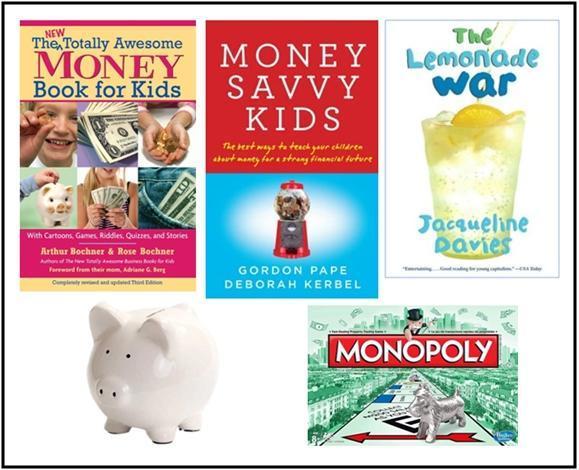
To help you teach your little one about spending, saving and personal finance, RateSupermarket.ca is excited to offer a fun-filled prize pack with educational games and books valued at $75!
Items will include (or be similar to):
Monopoly, the classic game can help children learn the importance of building a strong asset base, budgeting and setting aside an emergency fund.
The Lemonade War by Jacqueline Davies is the first in a series about two siblings who open up competing lemonade stands. The story escalates as the siblings use their skills and a few ideas about entrepreneurship to drive their “lemonade war” to amusing heights. “The Lemonade War” teaches the basics of entrepreneurship, planning and money management in the context of an enjoyable adventure story that hits upon the lives of upper elementary children.
Money Savvy Kids: The Best Ways to Teach Your Children about Money for a Strong Financial Future written by Gordon Pape and his daughter, Deborah Kerbel, which will help you get your children on the right track to understanding all about money. It contains sound, practical information from Canada’s most trusted financial writer plus many delightful and humorous personal stories that will leave you laughing while you learn.
Piggy Bank which will encourage your little one to start saving their allowance or monetary gifts with a cute piggy bank.

16 Comments
the site said American Express Gold Rewards Card would be best for me
American Express Gold Rewards Card
American Express Gold Rewards Card
TD® Aeroplan® Visa Infinite* was what it chose for me
TrueLine MasterCard® credit card – rates between 5.99% – 14.99% is best for me
RBC® Cash Back MasterCard card is best for me.
American Express Gold Rewards card
American Express Gold rewards card for me.
American Express Gold Rewards card!
MBNA Smart Cash MasterCard® Credit Card – funny, because I’ve heard about it a long time ago and didn’t believe it would be much better than the one I have.
Amex Simply Cash
Walmart Master Card
American Express Simply Cash
Scotia Momentum® VISA Infinite Card is the recommended card for me.
The MBNA Smart Cash MasterCard Credit Card was recommend for me.
i recommended the American Express Gold Rewards card