
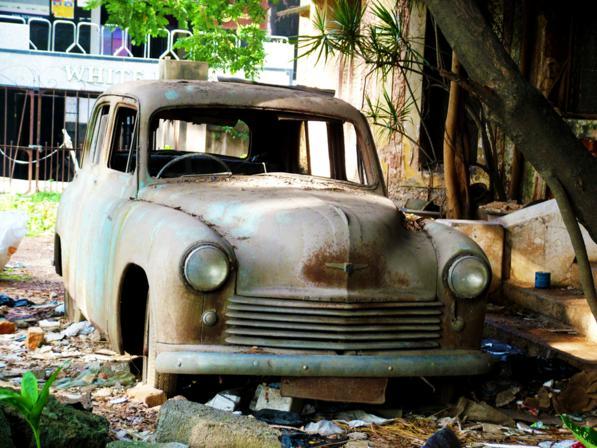
How many of you had a beat-up old car as your very first vehicle? But you were happy because it took you from point A to point B, even if the entire car shook as you drove.
Whether you’re looking for an inexpensive car for your newest teen driver or a fixer-upper for yourself, there are a few precautions to take before buying a salvage car at a junk yard.
For example, keep in mind that a car receives a salvage title when it is totaled, in most cases either because of a car accident, or fire or water damage. According to HowStuffWorks.com, “A car is considered totaled when the cost of repairs is greater than the car’s worth.” So, the safest bet is to look for an older car, because the damage can be less in order to total the car. An expensive or luxury model has to have far more damage to receive its salvage title than its older, less expensive counterpart.
Possibly the best car to find at a salvage yard is a theft recovery vehicle. HowStuffWorks.com explains, “If a stolen car isn’t recovered within three weeks – or in some cases, 30 days – the insurance company pays the original owner and writes the stolen car off as a total loss. If the car is found after that, it gets a salvage title – and it might not have any damage at all.” When you come across these recovered vehicles in a junk yard there’s a good chance they aren’t totaled or damaged. But you still want to proceed with caution and keep the following three tips in mind.
1. Beware of bogus sellers. The most important thing you can do when car shopping at a salvage or junk yard is to find a reputable salvage dealer. Find the salvage yards in your area and do your research by checking them out with the Better Business Bureau. Then, after you find a trusted dealer, make sure they also sell to the public, as many don’t.
2. Bring along someone with car smarts. When you do finally decide to pay your local junk or salvage yard a visit, if you can, also bring along a trustworthy mechanic to advise you. This could keep you from buying a car just to find out it has more damage than you think. A mechanic should be able to tell you exactly what damage the car has and how much you should be prepared to spend in order to fix it. They may also be able to find the car’s history report from the VIN number, which would also be helpful in making your car buying decision. Also keep in mind the car you settle on might not be drivable, meaning you’re responsible for towing it off the lot.
3. Be ready to barter. According to HowStuffWorks.com, “The rule of thumb is that a fully reconstructed salvage car is worth roughly 60 percent of a car of the same make, model and year with a clean title.” Keep this in mind when you go in to strike up a deal. Also, keep in mind most salvage and junk yards accept only cash. Some may accept checks, but be sure to check before you go in order to have a way to pay if you do come across a car you want. If you are applying for financing, make sure you have been pre-approved and have the payment ready before you arrive because these yards are unlikely to hold a car for you until you have the money available.
While car shopping at a junk or salvage yard may seem like a risky endeavor, buying a car from a trusted salvage dealer can pay off big time if you follow these helpful tips. A little common sense and the right advisers to come along with you can help you save a lot of money if you’re willing to take the time and energy required to turn a totaled car into your next four-wheeled ride. And don’t forget to secure your new car purchase with the right auto insurance coverage from a trusted insurance company before you take it for its first spin.
If your teenager complains about the terrible patch work paint job? Tell them they are lucky to even have a car to drive to school!
This post is sponsored and was created and provided by Nationwide Insurance.